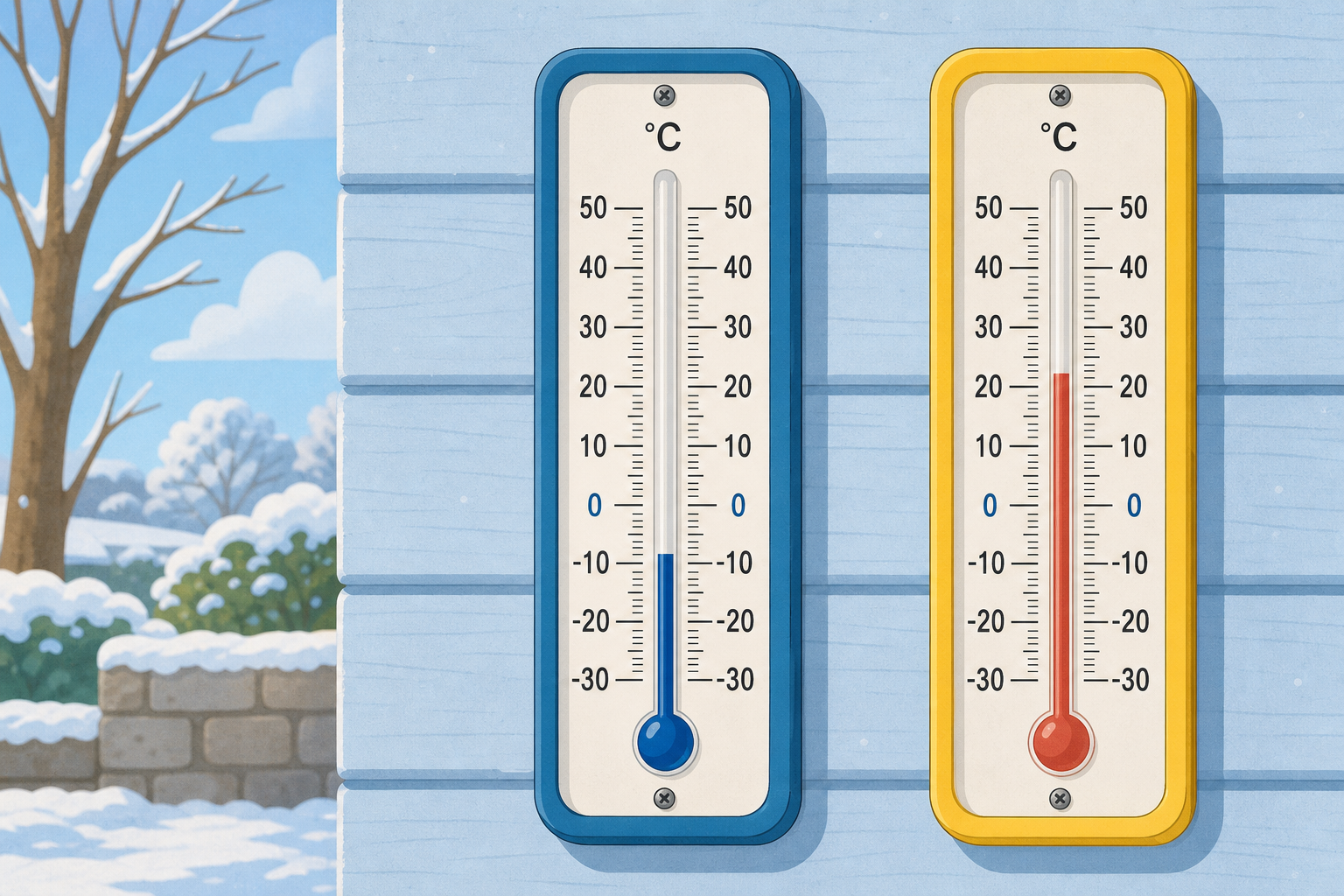
Here are two winter mornings. In one town the thermometer reads −7 °C. In another town it reads −3 °C.
Hands up: which town is colder? And here is the tricky part — which number is actually the greater number, −7 or −3?
The number line shows two markers at a time. Watch where each one sits: the number further to the left is always the smaller one. See if you can call the greater number before it's confirmed.
Now we work through five pairs together on the board, deciding the greater number in each one. For every pair we drag marker A from one end of the line to the first number and marker B from the other end to the second, and read which one sits further right — that one is the greater number. First predict, then place, then check as a class.
First we will work one pair together on the board so everyone sees how to write the comparison sign. We take −5 and −2: decide which sits further left (that one is smaller), write the correct < or > between them, and underline the larger number.
Then, in your maths copy, write each pair of numbers and place the correct < or > sign between them. Then underline the larger number in each pair.
Now we work through five more together on the board, placing the greater number of each pair: the greater of −3 and −8, then the greater of +1 and −5, then the greater of −7 and −2, then the greater of 0 and −9, and finally the greater of −4 and −6. Predict where the answer lands before each marker goes down.
You're previewing this lesson. Get full access to this lesson and hundreds more — each one ready to teach, with interactive activities, printable resources and pupil progress tracking built in.